
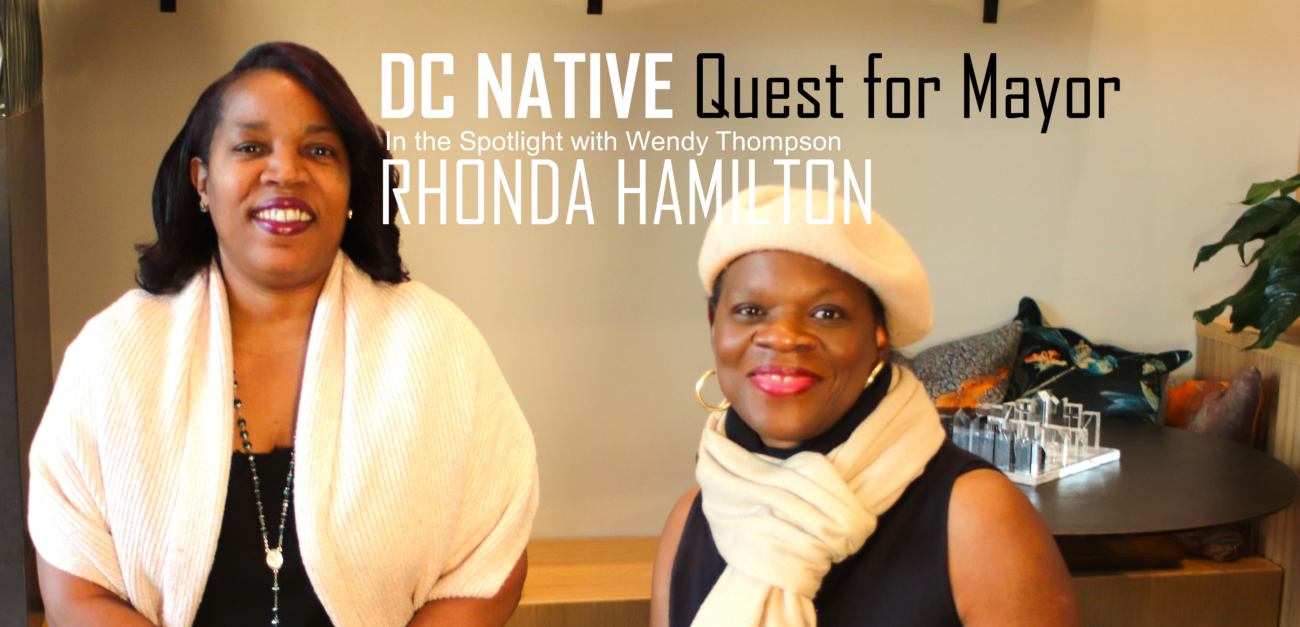
IN THE SPOTLIGHT WITH WENDY THOMPSON – Washington, DC mayoral candidate Rhonda Hamilton seeks fair and “balanced” city for poor and wealthy residents
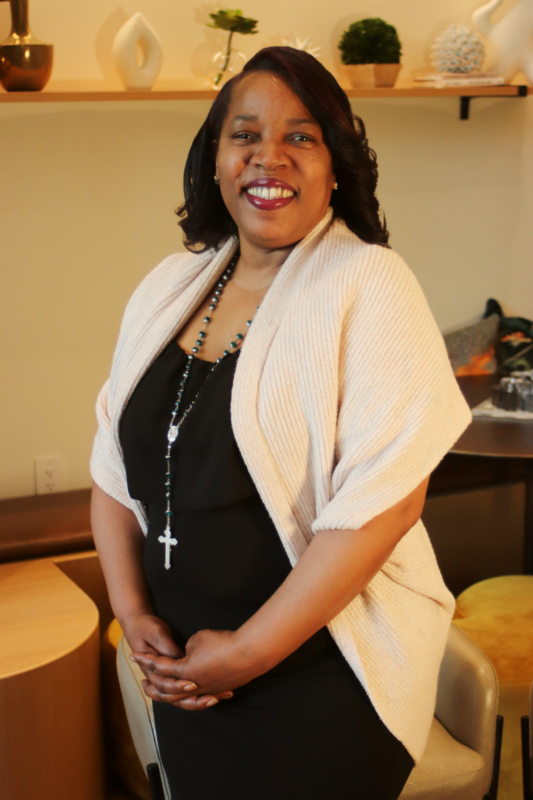
Washington, D.C., mayoral candidate and Ward 8 native Rhonda Hamilton (I) sat down with DC Spotlight Editor Wendy Thompson to outline her vision for the city and explain why she entered the race. A former real estate broker, mortgage professional and longtime mental health and housing justice advocate, Hamilton said she was driven to run after witnessing what she describes as deepening inequities, government mismanagement and a growing disconnect between City Hall and residents. With a campaign focused on auditing the city’s $22 billion budget, restoring accountability and reinvesting in underserved communities, Hamilton is positioning herself as an independent alternative centered on “balance.”
Wendy: We’re here with Rhonda Hamilton, who is the DC candidate for mayor. She’s running under the independent party’s candidacy, and I’m not going to introduce Rhonda, what I’m going to do, so I’m going to let her tell me all of her accolades. Give her a moment to brag about all of the things that she’s done. So give me about four or five things that you’ve done that we need to know about.
Rhonda: Absolutely, I think, first and foremost, we should understand that I am a former real estate broker, actually the first African-American franchise real estate broker under the Coldwell Banker brand in Prince George’s County. And not only did I spearhead running a real estate brokerage, but I also actually ran a real estate school. So I’ve been responsible for helping to train folks not only find their first home investment properties, but also how to run a business. Also, I am a former mortgage professional. That is what steered me into real estate. So I came into the mortgage business at a time where folks had 17 and 18% interest rates. And so you can imagine that we had to be very studious in helping folks to navigate in that market. I’m also a former, not a former, current, mental health advocate, housing justice advocate in the nation’s capital, and that’s been the case for the last decade. We’ve spearheaded town halls, we’ve stopped bridges, we have sat in on hearings. We went to visit each of the council members, independently, collectively. We have hosted town halls and rallies, is what I want to say in protest. So I’ve been very active over the last decade in matters regarding mental health and connecting them to matters of injustice and social justice in the sense of human rights and dignity and quality of life. I’m also currently an insurance broker, and the district 80 times, well, 81 times wealth gap is certainly something that I’m excited to introduce with insurance financial products. You know, as we try to navigate putting our city back on track. We want to close that wealth gap. Many health insurance to be the first introductional step to wealth and so, yeah, I’m excited to be able to bring those tools to the table.
Wendy: Okay, sounds good. Great resume there. Great resume there. So let’s start with the obvious. First of all, before I ask you, “why did you run?” I want to know, is this what you always wanted to do? What did you want to be when you grew up?
Rhonda: You know, they say, Dr. King had a dream. I did not have a dream to be a politician. I can tell you that, being a third generation Washingtonian. Timing. Timing is what dictated. As you heard me mention, I’ve been doing my work in the Small Business and the private sector, and my mom, I’m the daughter of a very courageous woman who battles schizophrenia in my youth. And one of the things I recognized in the city and all of the headlines coming out is I wondered if there was professional, proper help for families that were struggling because the headlines that were coming out of the nation’s capital were just sad, just very sad. And what I know is that I was reared by generationally women of integrity, women who took care of the community, women who were part of the village, who made sure that the children got to school, made sure that we were safe and that our men were protected, and that laws of governance were respected, the fact that we were families in our community. And so what I saw in the reality in the last decade, it saddened me because it didn’t represent the DC that I was raised in.
Wendy: So when you were growing up, do you want to go into politics, or what did you want to do?
Rhonda: No, when I was growing up, I’m my father’s only child, and my father is a military man, and so he wanted me to be a CPA, because I’ve always been good with numbers and math. And when I told him I was going to go into be self employed, and, you know, run a business, he didn’t understand where that came from. And so I believe that in becoming a self employed business owner and understanding bottom lines and understanding that the bus starts and stops with you. What I saw happening in the city, I realized that we had to elevate the stone throwing, so to speak. We had to elevate the frustrations and the emotions of our citizens who were just, you know, not happy with the current status of their living and what I realized is that there was a great disconnect from government to matters of community. And so I believe that the politician was born when I realized that these jokers down here, they just, you know, they’re not going to pay attention until we make them pay attention. And the difference, obviously, in running a business and running the government is that when you don’t get it right, you got human lives that are being impacted directly.
Wendy: And so let me stop you right there. What was the last straw? What were you saying? I’m going to do this. This is the last straw. I’m running for the position.
Rhonda: I think the last straw was just walking into those houses repeatedly, seeing the black mold, watching the ceilings caved in, watching property owners continue to get favored over the issues of our everyday citizens, the reality of preparing and writing legislation to be a deterrent to the what we call “the slum lord.” Understanding and watching the council members just go quiet, meeting with them, and them not having a valid reason as to why they shouldn’t be considering our option, but then watching the relationships that seem to be so powerful. So I would say it was a combination of things. But the truth of the matter is, when I looked at the numbers, you know, I’ve always been good with numbers. Numbers tell a story. And so my colleagues have been asking me. My community members have asked me to come forward. I just didn’t see that in myself. You know this, this is legacy work for me. I’ve already put my time in and, you know, done my career. So I thought, but the reality of looking at the numbers and realizing that there were 500,000 registered DC voters at that time in our local cycle, and we didn’t have more than 200,000 roughly showing up. And realizing that that had been a repetitive cycle, and realizing that more people were not voting than that were voting, I realized that we were obviously losing the hope and trust of our community members.
Wendy: Yeah, complete disconnect.
Rhonda: Disconnect. Disconnect. And I can understand, you know, nothing’s perfect, but the truth of the matter is, is that they, by meaning, our elected leaders, they hadn’t demonstrated that they even care. And I think that that’s what got to me.
Wendy: And so the people were responding as if they didn’t care.
Rhonda: Absolutely.
Wendy: I guess they thought they did not care. So they the voters responded in that way.
Rhonda: Absolutely, and they were bitter. They were bitter. And what happens when there’s a disconnect of governments to community, then the village falls apart. And so then they wonder why the guns are going off and why the headlines are what they are. The truth of the matter is, our communities are structured, but when you start to pull valid resources, vital programming and without supporting our big mamas, you know, big mamas know what’s going on in the community. And so when I get to a community and my wisdom is that they’re at their wits’ end and they’re frustrated, then I understand.
Wendy: Something has gone wrong.
Rhonda: Absolutely, absolutely. And I couldn’t understand why we expected to manage a $22 billion budget in the district with the headlines of the failures of public safety and the immense gun violence. I didn’t understand how to expect to fix that, they’re still trying to spend their way out of it, or lock us up out of it. You can’t, you have to go back to the community level. You have to reconnect and understand that public government, public assets, are meant to preserve the community, the lives of the community, and when housing is not stable, how on earth is anything else able to be taken… you know? How is anything else able to progress? Is what I want to say, you know. And I can understand how they didn’t understand that. But what I also saw was that they were very uncomfortable with mental health, the stigma around mental health, talking about communities that were failing, those communities were fighting with mental health challenges. And what I saw is that they didn’t understand the layers of it. There was this one size fit all. So there were so many factors that brought me to the forefront. But most importantly, [I’m] someone from the media had a humble upbringing, and I was able to get out and get my education and go see the world. Live in another country in fact.
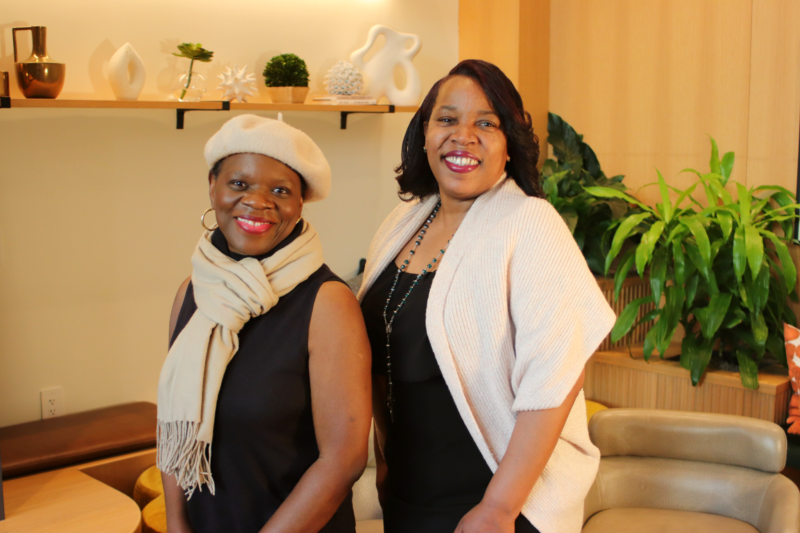
Wendy: Where did you live?
Rhonda: I lived in Germany. And it changed my perspective. You know, when you leave and come back and you realize that there are young lives who’ve never left these settings, and probably will never leave these settings. You realize that the future is better than that. And it doesn’t have to be like that when we’re moving the kind of money that we are.
Wendy: So you mentioned a lot of the projects that are going on in the DC area, and you said, if they can pay for that, why can’t they pay poor people [service]? So, what projects are you speaking of?
Rhonda: Well, I can tell you the large ones come to mind, because obviously those large dollar value items can help you start to think about how many lives you can touch with that. When you look at all of, we’re the nation’s seat of governance. First of all, let’s say that. Coming from real estate, one of the things that we understand is that it’s about geography. Who doesn’t want to do business in the nation’s seat of government, but the reality that we were showing up and not leveraging that for the livelihoods of our families were a problem. The most recent project was the RFK project, and in and of itself, I’m a native. Of course, we love our Commanders who were the skins at one time. But of course, there’s history there. But when we pit the community against each other, deciding whether or not we should have us take advantage of our opportunity to bring our sports teams back, but then we see 70 plus grocery stores west of the river and three east. You know when you see that there’s five level one trauma hospitals west of the river, and one failing $400,000 project east of the river that’s not even been opened this year. It begs the question, you know, you have to question where, what’s going on, who’s at the helm? And what are their qualifications?
Wendy: Where is the value? Who’s valuable?
Rhonda: Exactly, exactly. Yeah, exactly. And so we understand being a nation’s seat of governance, the politics are going to show up. But again, we have a responsibility when we don’t get it right, and it impacts the life, and then it dominoes. And then you see these cycles that folks are not able to break free from. The one thing that I saw as a telltale no matter what was going on in our governance and in our city, we’ve always been a DC that’s taking care of our young people and our seniors, and so just as we send our children to school for a report card, our elected officials should be graded so that they understand when they’re failing us and they have been failing us for quite some time. So when you ask me about the project, whether we’re talking RFK, whether we go back and we talk about the Ted Leonsis deal that rendered another 500,000 almost 600,000 when you talk about the tax breaks, and then when you look at the traffic cameras. We’re raking in millions of dollars, and every time we make these large investments, we come back and threaten the social programs and constructs of our marginalized citizens and our working class folks. It’s like we’re paying for these things on the backs of their families and their sacrifices.
Wendy: I’ll tell you personally when I come to Washington, DC, because I live in the Maryland suburbs, when I come to Washington DC, I factor in a ticket from those cameras.
Rhonda: As you should.
Wendy: I factor in a ticket because usually I leave with a ticket.
Rhonda: Fun fact: Do you know we lead the nation with cameras?
Wendy: Yeah, and I read your press release today, and you used the word aggressive cameras.
Rhonda: Because that’s the way they feel.
Wendy: It makes you, honestly, not want to come to the city.
Rhonda: It’s supposed to be a deterrent for traffic challenges. However, when you look at the populations that tend to–now you’re in the suburbs–but everyday working class families…
Wendy: Who live here.
Rhonda: Yeah, it is ridiculous and I’m getting the calls. And the truth of the matter is, is that you can’t have it both ways. You can’t have folks being taxed through these tickets, and then turn around and say, well, we don’t have any money, so we’re gonna have to cut this. Well, it doesn’t make sense. It doesn’t add up. What are you doing with the money?
Wendy: So, I want to just preface everything you’ve said and say you’re a DC native.
Rhonda: Yes.
Wendy: You were born and raised.
Rhonda: Absolutely.
Wendy: And did you leave and come back?
Rhonda: I did well, as we do, we grow up, we get educated, we go out and see. I was born and raised in Ward 8 southeast DC, and it resonates for me when you know we put our programs on the ground, and I have young, brown and black children that are from Ward 8 southeast who’ve never left the neighborhood, never left the community. That could have been my reality, you know. And I thank God for the village that made sure that I did what I was supposed to do. And again, we had a structure. It was expected of me, and now it feels like our government has evolved into this death by zip code, depending on where you live, that’s just your reality, and it’s not going to get any better. You don’t sell that to children. And that’s what I saw.
Wendy: Well, you don’t sell that to your community.
Rhonda: It’s absolutely, absolutely. But why I say the children, because generationally, you know, I stand on some shoulders, you know, and I was raised with expectations, and not only that, I was raised in the city during a time when the late great Marion Barry was our blueprint. We know what it looks like and what it feels like when government is working for the people, and the reality of sitting by and watching it, watching them do such a poor job and operate as if they have the power and render my people powerless. No, that’s not an option.
Wendy: So, what is your plan like, and how does your plan differ from Mayor Bowser’s?
Rhonda: That’s a lot. You gave me a lot of room there. Okay well, I can tell you, first and foremost, I’m very basic in the idea that government, public government, is always supposed to be of the people, for the people and by the people, you know. And the reality of allowing so many special interest agendas and so many corporate understandings to come in and have favor over the everyday working class family and over the everyday citizen who was generationally connected here. And then you watch, the gentrification is rampant, and then people are being pushed out of the city. So, I am coming to restore a balance to our governance.
Wendy: Balance.
Rhonda: A balance.
Wendy: I like that word: Balance.
Rhonda: You know when I just read off some numbers to you in terms of basic things, grocery stores, hospitals, just basic infrastructure.
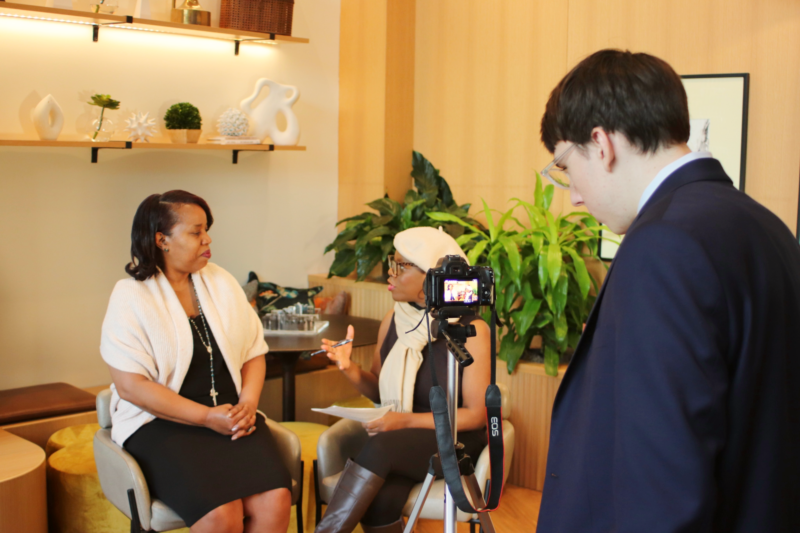
Wendy: If you’re going to put three grocery stores here, put three there. If you’re going to put two hospitals here, put two there.
Rhonda: I don’t understand how they sit and divvy up a $22 billion budget. Dwindle it away, we end up with the landscape that we have. And now here comes the Republicans and Mr. Trump to say, “Oh, DC is dirty,” and it was. And I’m saying who–I wouldn’t need anybody to tell me that a nation’s capital should have a certain look, but the reality of all of the pay for play schemes and all of the power moves that have been made, all of the dismissiveness and ignoring citizens living with mold and just, you know, the reality of the power struggle makes no sense. It’s public government, and you’re supposed to be graded by the people that you’re serving.
Wendy: Well, this is what I noticed. And you know, I don’t live in the state. I mean, not the state. I’m sorry, in the city. I live in the state of Maryland, in the suburbs, but I use the city, DC a lot.
Rhonda: As many do.
Wendy: DC spotlight, this is our city that we cover, you know. But what I’ve noticed is the wealthier portions of the city have become wealthier.
Rhonda: The rich get richer and poor get poorer.
Wendy: The poorer sections of the city have not progressed.
Rhonda: And you know, the interesting thing about that, in the midst of that, through since the beginning of time, or since the beginning of our research, poverty and crime go hand in hand. How in the world do you think you’re going to solve the crime concerns if you don’t address the very deeply rooted poverty in DC’s history that’s been the case? But the truth of the matter is, is that we budget enough money that, if run properly, we would be able to see the same things that you’re speaking on. We would be able to offer a better quality of life to families, regardless of where they live. But the truth of the matter is, there are many folks that are migrating into DC, and they’re having a better experience than people that have been here generations, and that’s just not acceptable.
Wendy: What do you love most about the city?
Rhonda: The people. Our people are our strongest assets. And that’s you know, when folks say, “Well, we still have to deal with Trump.” I’m not worried about Trump. You know, I’m really not. I believe that DC’s strongest assets are our citizens. And I keep asking the question, because I walk the city daily, and I’m in and out of communities, and too many of us are not educated about the things we should be educated about. Home Rule. How do you fight for something when you don’t really understand what it is? What it really is? How detrimental it is to your rights as a DC Citizen?
Wendy: Well, how detrimental it is to your rights. And also, if you don’t understand the process of how to get to Home Rule, how can we fight for it?
Rhonda: And it’s sad because we house, we house the lawmakers. People come here from all over the world, one of our strongest revenue streams before Mr. Trump was our tourism. People love the nation’s capital. Those of us that have been raised and reared here and kind of kept out of the bubble, so to speak. It is just sad, and I feel responsible for making sure that regardless of that lack of education, that we still have political will to bring our strongest asset to the forefront. And so I asked the question: What would it look like with the 300,000 Washingtonians on the steps of Congress? It would be a different conversation.
Wendy: So how did you first get into politics? First of all.
Rhonda: Okay, that’s a great question. Well, in 2022, once I finally agreed that I would come forward, I realized that the makeup of the city was such that we were considered a blue city. You know, as they say, the red is the Republican, the blue is the Democrat. Well, I didn’t see us as a blue city, because I saw the voting numbers and the Blue was not pulling out at least 40%, if that, of their own voting block. So I said, this isn’t a blue city. You don’t get to claim it if you’re not able to reach them, engage them and move them. And so in 2012, I watched President Obama on “60 Minutes,” and he was apologizing to those of us who had knocked doors. I had gotten off the bus in Richmond and helped volunteer. [I] wanted to be a part of that change. Yes, we can. I was a small business woman, and I just wanted to understand how we could do better. And I didn’t want to be just a part of the problem complaining. I wanted to be a part of the city. And the truth of the matter is, is that when he was apologizing on “60 Minutes” because he said he thought if he reached across the aisle and gave them what they wanted, they would reciprocate. And I said, wait a minute. You know, the blue party will never assume my vote again, because most of us, we inherit our party from family members and times change. And so we have a responsibility to be educated, better educated about the issues. And so I realized as a small business woman that it had to be about the person’s, you know, their morals, their integrity, their intentions, of what they want to do with their power. You know, in a capitalistic society, it gets really dangerous when we have so many families that are living in poverty, in DC, for example. So I got into politics, most likely, after my mental health advocacy work turned into activism, and I found myself running more town halls and forcing the politicians to come out to the community level, because my citizens were intimidated and they weren’t educated. They weren’t placed. They were suffering with housing challenges, but they had not participated in a housing oversight hearing, you know, and so they didn’t understand the process. But there were no public service announcements to say, “Hey, this is how you do district government, you’re not voting, and you got to vote, and this is how, and this is what it means to vote.”
Wendy: So are you trying to educate the people who need this help the most? Because I think that’s where the disconnect is.
Rhonda: Absolutely but it’s a combination, because up on the flip side of this, not every DC resident is all about diversity, not every DC resident has, this is not their reality, and that’s what the balance is about. Now, if I’m living in one of the richer wards, and I don’t depend on programs, or I may feel a way that the largest part of our budget is on these social programs, and they keep failing. But if my tax dollars are involved, then I do want to understand how, what are you going to do better? What are you going to do different? I do want to hold you accountable. And again, we want public safety to be addressed, because if it’s not addressed, then they’re going to show up on your doorstep. And one of the things that I’ve realized is, as a tax paying citizen myself, it’s just about the word accountability. When are we going to audit these monies and find out what’s going on? Why don’t we keep watching the patterns of behavior of a mayor that makes these grandiose, you know, decisions to invest, and there’s nothing wrong with investing, but there’s something called being accountable, you know. And so we’ve watched her time and time again, spend large pieces of our budget on how to manage our assets, and then turn right around and say that they have to cut SNAP, cut programs. You know, we can’t. We can’t operate that way.
Wendy: And ICE. What is the deal with ICE harassing the community?
Rhonda: Well, ICE is a part of Mr. Trump’s and the Republican agenda that we inherited when he won, and the reality that we were so weakened, and our demonstrations of oversight and governance were the crime. He decided to step in.
Wendy: How would you change that? Because you would inherit that.
Rhonda: I would absolutely inherit that. And I would say this to many of the citizens that feel safe and feel better because they’re there. When we have to start depending on outside forces to take care of very basic oversight of our city and Public Affairs, our public safety matters, then that means that our elected officials are not adequate, and I am a leader, and I will lead by example, and I will make certain that there are consequences, but most importantly, consequences doesn’t always mean sitting in a jail cell. Consequences mean that there are health concerns, there are social constructs, there is a lack of education. I’d like to see more of our folks that are getting caught up in the public safety understandings be a part of our economy. But how do we do that if we don’t have proper programming and proper resources to hold them accountable to do so? And so I believe that when we don’t, ICE and the presidential agenda that wants to move in and take us over because they know that we deserve to have our own autonomy and not have it threatened. But again, real estate. We’re the nation’s seat of government, and I don’t intend for us to lose it on my watch. And so we’ll have to go back to the table.
Wendy: So what would you do, though?
Rhonda: Okay, so as far as ICE, when I look at how successful California has been, when I look at how successful Illinois and Oregon and Philadelphia have been, they’ve taken them to court, they’ve drawn the line and said, “Look, we can’t control what we’re going to try to do, but we want to let you know when you come here, this is what it looks like, you know, and you’re going to have to be taken to court.” I wouldn’t just take them to court. We have not galvanized our citizens. Our strongest assets are our citizens and their voices. Our citizens are divided. They’re not educated, and they have this false sense of security that they’ve been allowed to fall, you know, fall prey to because our local government and leadership has not been accountable, and so we’ve got some work to do in the district, but the first step is to have our agencies, our resources, take care of our citizens, to make sure that our budget is managed in a way that we can provide what it is that we need to provide, so that crime is not a continuous choice for folks that have nothing and that don’t have income understandings that would help them to be motivated not to be continuing the same patterns. We have too many guns on our streets, right? So we’re going to push back, and we’re going to make sure the federal government understands and the congressional representation understands, we are not going to give up our rights as citizens. We pay more per capita federal income tax than many of the states. We’re larger than two of the states. DC citizens have earned the right to have their autonomy. What we’re going to have to force Congress to decide [is] whether or not that’s going to come in the form of statehood or some form of amended Home Rule understanding because we can’t be prey to whoever’s in the White House as to what’s going to happen for the livelihoods of our citizens. And so that’s why I asked the question, what would it look like with 300,000 Washingtonians on the steps of Congress? It would look like we’re going to control that conversation and not continue to ask them to leave us alone. We’re going to demand that they do because our tax dollars pour into that government as well.
Wendy: What is your relationship with Mayor Bowser?
Rhonda: Other than being a thorn in her side? I don’t have a relationship with Ms. Bowser. I’ve heard that we look similar, and I guess we get that in our lifetime. Everybody looks like somebody, but I don’t have a relationship with her, and I would not have a relationship with her outside of advocating and showing up and helping her to understand that there has to be a higher standard in her governing. And we have debated in ‘22, you asked me earlier about how I got into politics. When I finally decided I would come forward, I declared in the second half of the ‘22 election, not necessarily because we thought we had time to put it together, but there had to be an opportunity to deliver word to Ms. Bowser and the agendas in this town that thought it would continue to run that way, that her replacement had a problem. And so, we did a debate and publicly she left the platform, and it’s been a month since then.
Wendy: So day one, what will be your agenda? What will you do on day one?
Rhonda: We must audit our books. We’re going to audit our books, and in addition to auditing our books, we are going to also look at the contracts and the allocated fundings that have gone out and that have yet to go out. So if we can understand where our budget loopholes are, understand contracts that are bleeding our budgets that we’re investing and not getting a return on our investment. We’re going to raise the standards of our government, it’s going to make sure we’re not just putting our money out there without understanding for our citizens what’s working. Whether we’re talking DPW, DPF, the public school systems, the DCHA, the DYRS, DOB. Our agencies are not operating properly, and I suspect that when we have lack of government oversight, as we’ve had for such a long time, that perhaps the core service values folks have gotten away from that, folks that have not understood what the standards should be and I want to reinforce that. So, the first 100 days we’re going to spend auditing our money, auditing our agencies, taking a look at the contracts that are set to pay out, understanding how we can strengthen our prose to protect our Home Rule, making sure that legal council is in place and that we understand from the President as well as congressional lawmakers that with a change of leadership should render us the grace to put our house back together.
Wendy: So, Rhonda Hamilton, you’re the candidate, she’s the candidate for the independent party. And we’re looking to see more things from you.
Rhonda: Awesome.
Wendy: Yeah.
Rhonda: I like that. I like that. And I’m looking for our citizens to vote principle over party because I know that Washington, D.C.’s local elections run the risk of being overshadowed by the national conversation. We need to take care of our local house and then we can all come together and go after the national concerns.